

 New Worlds of Body, Mind & Spirit Since 1901
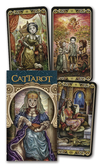
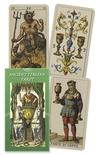
| The Magickal Universe is that portion of the universe that is invisible to our physical senses. It contains the inner worlds of the magician. The Enochian Tarot conforms with the structure of the Magickal Universe as taught by Enochian Magick, and the cards themselves conform with the vast potential of our universe.
The Major Arcana has 30 cards, each corresponding to one of the 30 regions of the Magickal Universe known as the Aethyrs. Each card of the Minor Arcana represents a deity or group of deities that inhabit regions known as the Four Great Watchtowers. By using appropriate ritual and meditation techniques, a magician can focus on a specific card, and it will act as a door into the corresponding region of the invisible worlds. It can also serve as a magickal communication link between the magician and the deities pictured on the cards. The Enochian Tarot was designed to be a medium of enlightenment. It is a map into the realms of spiritual bliss??"a record of humankind’s relationship with the cosmos. In short, it is like a textbook of occult teachings. |