The pre-Christian, Roman wedding ceremony also practiced in Celtic lands. As the name implies, it included tying the hands together and is the source of the expression “tying the knot” as a description of a wedding. In the sixteenth century, one English cleric noted its use as separate from the Christian marriage. Today the term is used by Wiccans and Witches for a wedding ceremony. In some traditions, a handfasting endures for a limited time, often a year and a day. Hence, a probationary marriage during which a couple would cohabit as husband and wife. After the probationary period the couple could decide if they wished to continue in a permanent marriage or part.
According to Handfasting and Wedding Rituals by Raven Kaldera & Tannin Schwartzstein (Llewellyn Publications), a handfasting was generally no more complex than the couple joining hands (thus making “fast” their hands) and declaring themselves united, sealing it with a kiss. They add that the handfasting gesture made a figure-eight with the hands, right to right and left to left, symbolizing that all parts of themselves were joined.
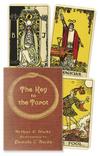
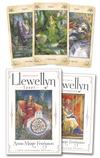
We are proud to bring our readers our annual tarot catalog! Discover the newest in tarot and oracle offerings from Llewellyn, Lo Scarabeo, and Blue Angel, plus get free shipping on US orders over $35 and 20% savings when you order any...



 New Worlds of Body, Mind & Spirit Since 1901