

 New Worlds of Body, Mind & Spirit Since 1901
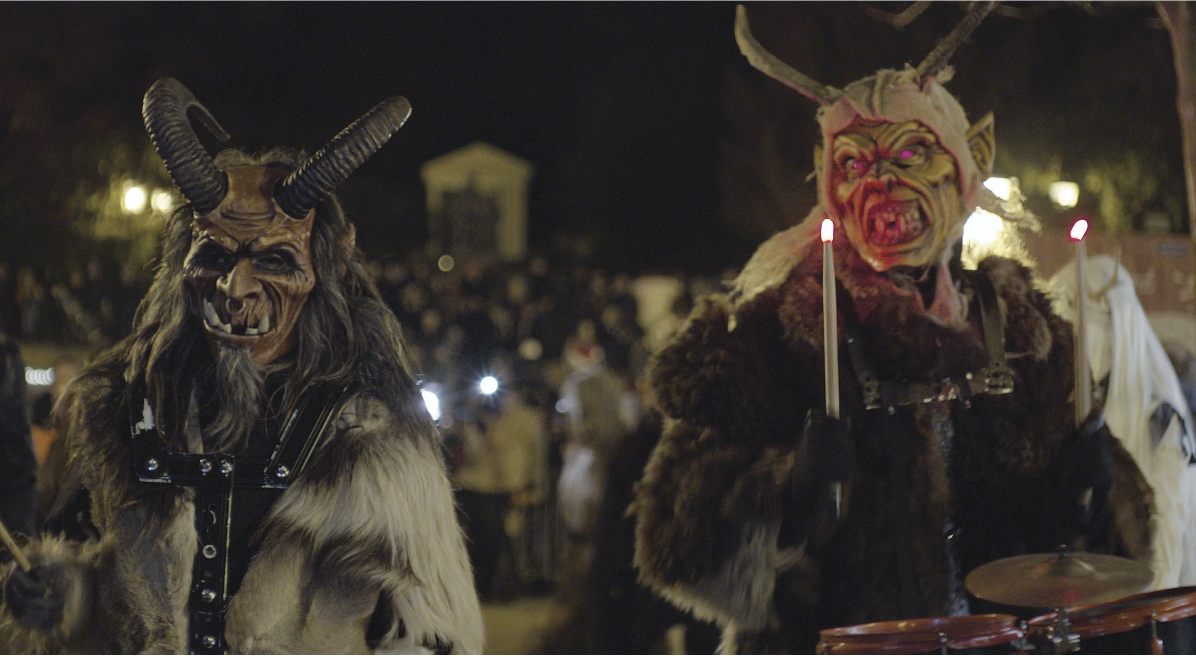
I remember one winter evening from my childhood in Austria more than any other. One December 5th, shortly before I was ten years old, I heard the doorbell to our apartment ring. As I followed my father down the dark hallway to the foyer, the clanking of a chain and some eerie grunts sounded from behind the door. Before my father opened it and a huge, dark figure with mighty horns filled up the whole door frame, I was gone. I don't know how I got from there to under the dining room table that quickly, but before the monster had even made one step into the apartment, I was hidden. I also don't know why I thought that under the dining room table was the safest place in our home, but there I was, recounting my bad deeds of the previous year. I never saw him, by the way. Which means, however bad I had been, he never saw me. I was spared for another year. How can a furry, horned figure that is (at least conceptually) more than 1,400 years old and can be traced back to European pagan times still be relevant in 2026? How could it survive priests in the seventh century complaining from their pulpits about "men dressing themselves as deer and other obscene deformities, putting on monstruous faces, acting like a stag, dressing in animal skin, and putting animal heads on their own" and instructing their flock not to allow these mummed youngsters to perform dances in front of their houses in the depth of winter because "all that are remnants of pagan habits?" There has definitely existed a fascination with this tradition throughout the centuries, although with various intensity, despite the always remaining opposition of the Church. And since the beginning of the current millennium, this captivation with this character has reached yet another peak. Krampus. This dark, hairy beast with goat horns; a long, red tongue; and one or two horse or goat feet (there is absolutely no consensus on the feet) and carrying the accessories of a chain, a switch, and a wicker back basket is enjoying a renaissance not only in its place of origin, but also worldwide. It needs to be noted that there has also been some deviation from his original looks and purpose, most prominently in the 2015 movie Krampus and its 2013 predecessor Krampus the Christmas Devil. Although the former is much better known, the 2013 title has all the most prominent misconceptions about this beast in its title. Krampus is not the devil. And he has little to nothing to do with Christmas. He definitely doesn't come to destroy it—rather the opposite. The confusion of Krampus with the Devil is most obviously based on his appearance (though Satan, when depicted as a horned monster, often has wings, which Krampus never has). Further different from Satan, Krampus's main objective is to right wrongs. Most of the times this is done presumptively, as a warning—just mentioning him to the kids is enough—or (in folk tales) by extracting the very bad ones from the community (which he does by chaining and carrying them in his back basket to his lair). But Krampus does not seduce you to do evil, to sell him your soul for mundane gifts like status and riches. That is what Satan does. What doesn't really help with the confusion, though, is that many Krampus groups in the Alps call themselves Teufel or, in its dialect version, Toifi, both of which mean Devil. But since everyone in the region knows that Krampus is not the Devil, we just simply understand what the names of these groups mean, and what they don't. He fulfills his purpose of cleansing and purifying the community from its bad apples on December 5th, during Krampusnacht ("Night of Krampus")—in other words almost three weeks before Christmas, or more accurately, the Winter Solstice. As such, he doesn't destroy either, just makes sure that this major marker of the year is entered into as a cleansed community. Another rather baffling misconception of Krampus is that he would be the son of the Norse Goddess Hel. Aside from the fact that Norse mythology doesn't attribute any children to Hel, Krampus isn't a singular character. Unlike Santa Claus, who is one distinct figure living in one particular place (the North Pole), Krampus is more a phenomenon that is born every year anew by the (mis)-behavior of the community. Even though we speak of "his lair," most often described as a cave in the mountains, there is no single place that is known as such. It's more a metaphor for "far outside the village in a rough place nobody goes to voluntarily." But if you would ask where that actually is, you wouldn't get a definite geographical place, just a wave of the hand and something like, "Out there in the mountains." Much has changed since the first seventh century records of mummed young men wearing horns and antlers around the Winter Solstice. Mind you, that was a time when the Christianization of Europe, especially in the more remote rural and mountainous regions, was just at its beginning. The Irish monk Columban even writes at that time of an incident where he ran into a gathering of a German tribe in which they were about to sacrifice a huge cauldron of beer to Wodan. (In other words, pagan traditions were still widely practiced at that time.) While not mentioned as Krampus per se in the sermons of that time, we encounter him in later in thirteenth-century decrees denouncing the practice, yet without an actual description. And an etching from the 1800s shows him in the entourage of St. Nicklas, with horns and a fur costume, carrying a switch but not the back basket, which was an attribute to another figure in the group, the Menschenfresser or "man eater." Now, if you think Krampus is the only creature that roams around in the Alps during winter nights, you are mistaken. There are quite a few others, both in folklore and physically on the streets of villages and towns between the Winter Solstice and January 6th, the day following the night of Mother Percht (Perchtelnacht, nowadays often referred to Epiphany). Especially on New Year's Eve and Day as well as on January 5th and 6th, community clubs called Passen stage so-called "Perchten runs" in their villages. While Krampus-runs only feature Krampusse and the occasional St. Nicklas with angels accompanying him, the variety of creatures in the Perchten-runs is much wider. First and foremost, you will see the Schiachperchten or "ugly Perchten." They are very close to Krampus in the way they look. The costume is made of long-haired goat or sheep hide; they are masked, showing gruesome faces; and they have horns. However, Schiachperchten often have more than one set of horns, while Krampus only has one. The carving of the mask is also different. Krampus masks are more animalistic-demonic, whereas Perchten masks remind me more of deformed faces, with oversized mouths and eyes. While fearsome—their task is to frighten the spirits of winter away to make way for spring—they don't have the same more brutal connotation of Krampus. What they also have in common with Krampus are the huge cow bells that are attached on wide belts over their buttocks. Every step the Schiachpercht (or Krampus) make these bells ring, and the specific steps Krampusse and Perchten do when approaching the crowd make sure that the bells can be heard. Often, they can be made out long before you actually see the monsters themselves. These characters, who—unlike Krampus—would only appear after the Winter Solstice are called Perchten because they are in the entourage of Mother Percht. She is a divine, dualistic figure; on one hand beautiful and dressed in floating gowns, and on the other hand a haggard, crumpled, mean old hag who slits your belly open to fill it with the filth she finds in your uncleaned home. The Percht also leads the Wild Hunt—unlike in more northern Germanic folk tales where this is done by Odin or Wodan. Part of this horde of ghostly wind creatures are some beasts that also appear in the Perchten runs. There would be the Habergeiss for example. She defies literal translation not only because her name just indicates a connection to goat, but also because the descriptions of her in folklore are so varied that it suggests that nobody really knows how she looks like. She is said to have a goat head on a long neck, but also that she has a bird's beak. The Habergeiss always has goat horns, but there is no consensus over the number of feet—often she is described as having three and therefore hobbles—or whether or not she has feathers and wings, because some tales tell of her flying and landing on top of your roof. There she glances through your sleeping room window and if that is open, she lays her heavy head on your chest and causes you to have shortness of breath and terrifying nightmares. Another fixture of the Perchten-runs is the witch. She is dressed in old, ragged clothes; her accessory is a broom; and her role is traditionally played by a man. Her job is not to cast spells, but to wipe out your home with her broom to cleanse it from the old year's spirits. Other participants in typical Perchten-runs are the bear and his herder (the latter usually a younger boy); the Winter, the Emperor, and a threesome of nature spites (the Moosmandl, the Baumwercher, and the Zapfenmandl). All three are representations of the forest, one covered with moss (Moosmandl), the other with lichen (Baumwercher), and the third with pinecones (Zapfenmandl). While they don't march in the parade, they are part of it. The actors are strong young folk who can climb onto roofs over balconies and rain spouts. From up there, they throw snowballs or shuffle snow onto the bystanders and act generally silly and jester-like. And then there are regionally specific Perchten, like the Vogelpercht ("Bird-Percht") in the Gastein valley. They wear dark masks with long beaks, and their eerie appearance is ominous and almost threatening. The next valley over, in the Rauris, they have Perchten with beaks, too. But here, their function is to check houses for cleanliness and, if you don't muster up to their expectations, they slit your belly open. However, you can distract them with a shot of schnapps and a cookie. And by now you might be asking yourself, "What is this all about? Why do folk in the Alps celebrate the depth of Winter with monsters and beasts instead of jolly old fellas and kissing under a mistletoe?" The answer is multilayered. Especially when we go back to the beginning of that season of fiends, to Krampus, much of it is about consequences. A community can only survive, especially the harsh winters in the Alps, if they are sticking together and don't have members who might cause harm. Krampus takes care of them, a little more harshly than Santa waving his finger but bringing you gifts anyway. The Percht and similarly the Vogelperchten demand cleanliness and wrapping up last year's work, else she slits your belly open. The Habergeiss does not allow you to mock or be a bully, for she will rip you apart for that, not just leave some pieces of coal in your boots. And the more severe cases of bullies are handled by the Wild Hunt. But it goes deeper. Despite the serenity and beauty of the Alps (which many just know from advertising and movies like The Sound of Music), these mountains also pose a constant threat to the survival of people living there, all year long. Severe thunderstorms in the summer cause fires and flash floods to bring whole mountainsides to the valleys; avalanches in winter, snow cover so high and persistent that whole valleys are cut off from the rest of the world for weeks on end; strong winter storms and glaciers eating up pastures and high villages (not anymore, but centuries back)—all this is part of life in the Alps. And how can a people deal with that? For one, making sure that the community is pure, that there is no evil amongst them, waking the evil counterparts in the dark forests and remote rock walls of the high peaks. Having creatures of consequence that threaten serious repercussions take care of that part. The other way to appease these forces of nature is to become one with them. You put on fur costumes, masks, and horns, make a really loud ruckus, and act just like you perceive them. This his how you understand these dangerous forces, communicate with them, tell them that you are one of them, hoping that they see that. Yet, should they not accept you as one of them, you at least show them how ugly and mean they look and with that scare them away like a mirror would a heinous monster. Is all that still relevant in 2026? People have not changed that much since early medieval times; there are still bullies and other wicked folk out there that could benefit from a show of potential consequences. Or who should be chained, whacked with thin hazel twigs, and whisked away so the community can live in peace and prosper. Nature itself also unleashes its wrath at times, with wildfires, floods, and melting glaciers, and with that breaking apart whole mountains that then thunder down into the thickly settled valleys. Seen through this lens, I would definitely consider Krampus and friends relevant! |

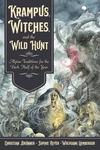
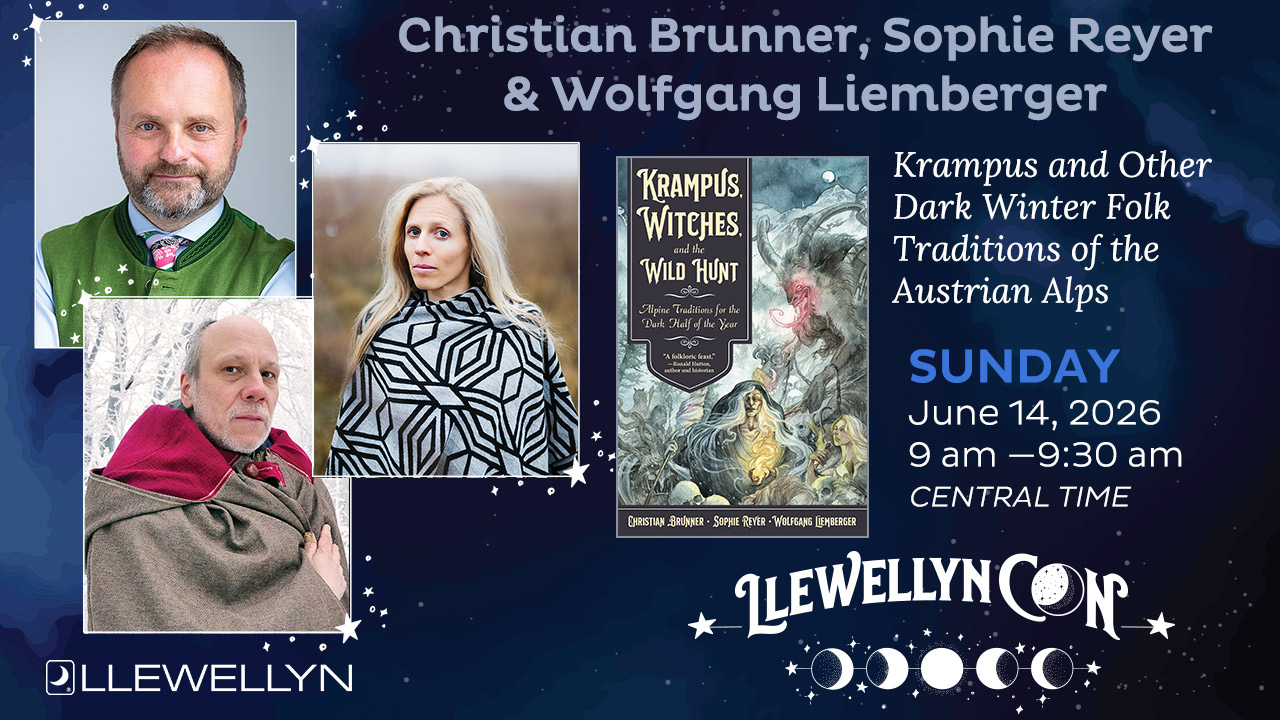
Christian Brunner has studied shamanic practices for more than forty years and naturopathic methods for almost thirty. These experiences encouraged his deep fascination for the Alpine lore and traditions in his native ...