

 New Worlds of Body, Mind & Spirit Since 1901
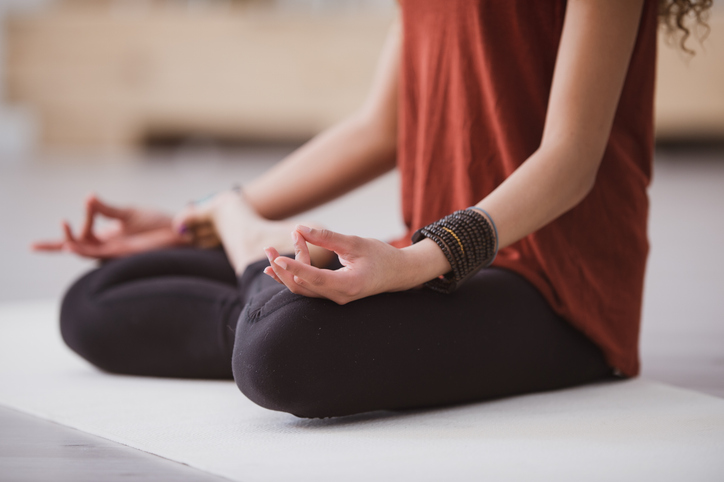 Why Set up a Home Yoga Practice? Even for people who do feel comfortable in group yoga classes, setting up a home practice can bring the tools of yoga to life in a totally new way. If yoga is medicine, then our home practice is how we prescribe our own healing. Yoga can become a transformative part of our everyday lives, rather than something we only practice at a set time per week. With a home practice, we can match our yoga to suit our energy and mood, as well as choosing a suitable time of day based on our schedule, including when we eat. Plus, it might feel easier to wear whatever you want when you're practicing at home—and who doesn't want to practice in their pyjamas from time to time? So, how do we set up a nourishing home yoga practice? Step 1: Integrate Poses from Your Group Classes into Your Home Practice Keep your practice low pressure, short, and playful. You could get onto the mat or chair to practice one specific pose from your notebook. For example, I find balance poses particularly fun. You could also just show up for savasana (corpse pose). This is the final resting pose usually done at the end of a practice, but why not try a stand-alone savasana? Alternatively, you could skip any physical practice and set aside time for a meditation practice. As with savasana, set a timer (preferably one that's not on your phone, to avoid its distraction) and take five, ten, or fifteen minutes alone. You don't need any fancy kit to start your home practice. Experiment with cushions, blankets, and whatever you have around the house to stand in as props. For example, you can use books for blocks, and a dressing gown tie or a belt instead of a strap. Step 2: Personalise Your Home Practice You might have an intention you're working with already, but if you're looking for a new intention, spend a few moments sitting quietly, turning in, to tap into your inner wisdom and see what bubbles up. You might like to bring a sense of ceremony to your intention setting. For example, you could light a candle or incense, if it's safe to do so in your environment. You could try saying your intention aloud or silently to yourself, and you might like to repeat it three times. Experiment with what works best for you—after all, that's the beauty of a home practice. To make your movement-based practice more rounded, try adding a warm-up and cool down to your session. Ideally, these want to be targeted to match the main asanas (poses) you're practicing. For example, if your peak asana is Warrior II, you might warm up with hip circles, to open around the hip area. However, sometimes our home practice takes us to unexpected places, simply following our intuition as we move. So, it isn't always possible to warm up specific parts of the body accordingly. Keep this in mind as you're moving, to avoid injury by only exerting yourself as much as feels right. One of the joys of a home practice is that you can feel freer to experiment with different breath patterns as you're moving. Often in group yoga classes, the teacher will cue when to inhale and exhale. Sometimes this doesn't match our own individual preference, and in a home practice there's more scope to explore what feels natural. As your home practice develops, you might want to consider your environment where you're practicing. Of course, we always need to be careful of objects around us, so we don't hurt ourselves on furniture, for example. But we can also think about the yogic concept of saucha, which is about cleanliness. What would it take to create a sacred space for your home practice? Are there any small acts of cleaning or tidying you could do to create a more focused energy? Most of us don't have the luxury of a dedicated yoga area. But even if your yoga space couples as an office, living room, or bedroom, consider putting something in this area while you're doing your yoga to signal that this is your practice space. You might set up a little alter with some nature finds, like shells or pretty leaves. As you're building your home yoga practice, reflect on what's working and why or why not, maybe adding comments to your yoga notebook. You could also record your intentions in your notebook. Some people like to note down their mood or energy before they do yoga and then write about how they feel afterwards, to raise their awareness of the impact of their practice. Step 3: Make a Daily Commitment to Your Yoga Practice As your practice evolves, start to think about your asana sequencing in a more conscious way, to be more systematic. For example, don't overload your poses on one side. If you do Warrior I and Warrior II on the right leg, take a symmetrical pose like a Wide-legged Forward Fold to reset before coming to your Warrior poses on the left leg. The most important thing you can do is make sure you commit to a daily practice, showing up even when you don't feel like it, or when you're not at your best. The magic of yoga is that our practice can support us through the hardest of times, whether that's illness, grief, or other difficulties. Our yoga support system is built on a platform of reliability that comes from showing up every single day—regardless of what else is going on. Come to your practice exactly as you are. You don't need to wait to be in a particular mood or to have a particular kind of energy. Yoga has this incredible way of recalibrating our system and bringing us back into balance. So, if you are feeling low in energy, your practice can give you a lift. But if you're feeling too high and scattered, yoga can help you feel grounded. Trust that your practice will give you what you need and ringfence your yoga time every day. Yoga is a complex system of tools for living well. Once we start engaging with yoga philosophy and learning about the Eight-Limb Path, as set out in Patanjali's Yoga Sutras, we realise that asana practice is just one component of yoga. Study the Eight Limbs of Yoga and introduce different elements to your practice such as meditation and pranayama (breathing exercises). Experiment with what works best for you in terms of sequencing your practice. You might like to move first, to work out any wiggles, and then come to seated practices like pranayama and/or meditation. Or perhaps you like meditating first, before moving, to drop in and see what is already there. Your daily practice can become an anchor that keeps you steady during the most turbulent of times. But we can also supplement our routine with little bursts of extra yoga throughout the day whenever we need it. For example:
Finally, expand your practice by considering your intentionality. Dedicate your practice to the wellbeing of everyone in the world and send out loving kindness to all beings. Consider how you can take your practice off the mat or chair and into your daily life, to be of service and contribute to dismantling systems of oppression such as racism, ableism, homophobia, and transphobia. An advanced practice isn't characterised by becoming some kind of gymnast or standing on our heads! It's about the extent to which we're living yoga. The challenge really comes when we get off the yoga mat or chair and into our everyday lives. Measure your progress by how you're showing up in the world, and how your home practice is enabling you to show up for others. Noticing little changes can help us to stay motivated. But be gentle with yourself—this is a life-long practice, and progress isn't necessarily linear. Step 4: Keep Your Home Practice Varied If you enjoy chanting, you might invest in some mala beads (traditionally 108 beads that help with counting as you chant). You could explore other healing sounds such as singing bowls or chimes. When you’re trying something new, stick with it for a little while to give yourself the chance to experience the benefits. Then you might call on specific tools to support you with your intention. There might be tools that you integrate into your practice for an extended period of time, like a week, month, season, or longer, depending on what is happening in your life. But it's also OK if you try something and decide it's not your cup of tea. Developing a home practice makes it easier to explore new things without feeling pressured to continue if it's not working for you. That said, you might find that when you come back to it another time, you feel differently about it. Experiment with introducing other elements into your practice that speak to you, such as dance or Qi Gong. Although the tools of yoga come from ancient India, the yoga poses we commonly practice in group classes are relatively modern. Don't be afraid to mix them with whatever you need on any given day, whether that's something creative (such as yantra colouring) or something physically stronger (like incorporating hand weights). For new inspiration, some people like to attend workshops about a specific theme, such as balances, inversions, yoga for menopause, or seasonally themed events. After a workshop, you can then spend time focusing on that topic at home, to go deeper into this area. Workshops aren't always accessible for everyone, for many of the same reasons as group classes. But you can treat books like your own mini workshops. For example, I spent a week focusing on the root chakra using the exercises in Jilly Shipway's book Chakras for Creativity. It gave me a chance to examine in depth something that is a key part of my daily routine, and to update my thinking about this topic. You might like to learn about a specific style of yoga, such as yin or restorative. If you have the funds and it's accessible, you might consider taking a course online or in person. Again, there is a huge amount that can be gained from studying books. No yogi is an island. As much as our practice is an internal process, we are benefiting from teachers, whether that through classes, workshops, courses, or books. These tools have been passed down to us through generations of teachers, originating in ancient India, and our own practice can be part of the conversation while we respect the roots of yoga. Engage with the wider yoga community, to find like-minded people and draw inspiration from what they share. For example, I'm a member of the Accessible Yoga School's mentoring programme, and their monthly online offerings help to keep my practice fresh. Maybe your practice will lead you to contribute to your community in your own way, through teaching, writing, or social media content, to share the joy of yoga with others. Taking Your Practice into the World Yoga teaches us about the value of looking beyond the binary, and recommending a home practice doesn't have to mean ditching group classes completely. But a home practice creates the conditions for us to become our own inner teacher. This relationship with ourselves is priceless and will hopefully benefit everyone around us. |

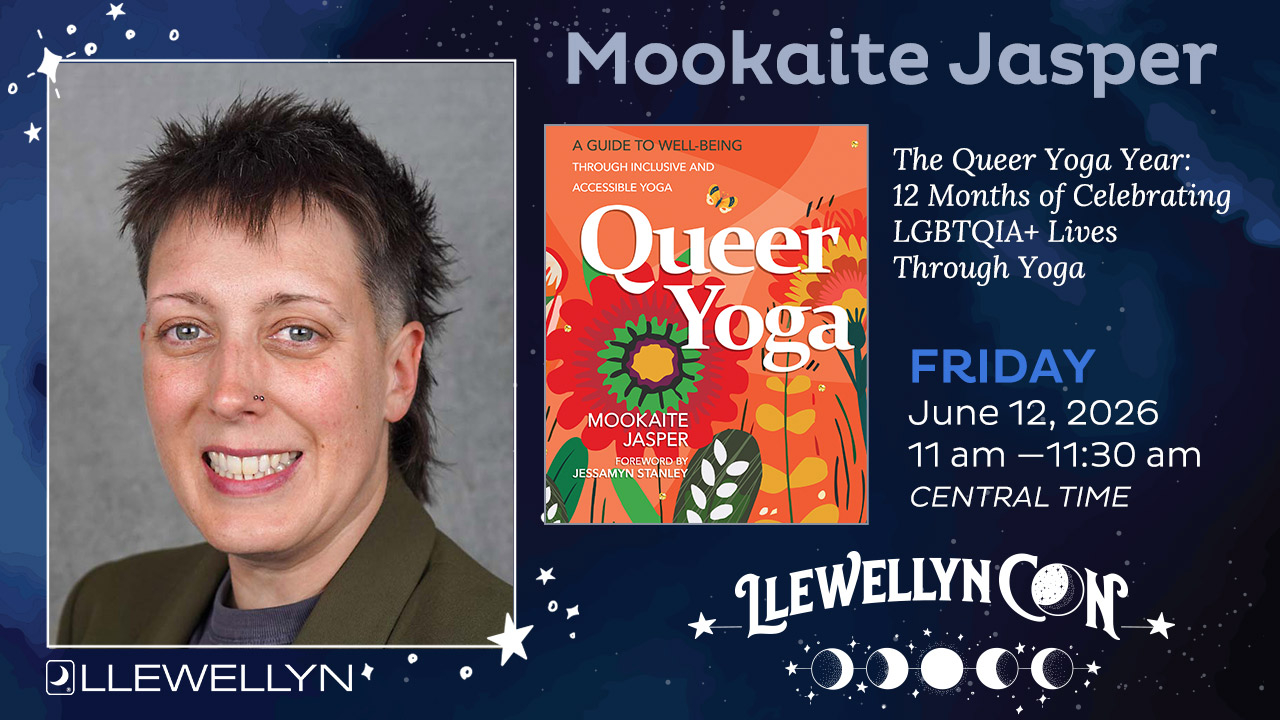
Mookaite Jasper (they/them) is a queer, non-binary writer and yoga teacher. Mookaite, known as Kite, is a member of the Accessible Yoga Ambassador Program with training in accessible yoga, adaptive yoga, yoga for older ...