

 New Worlds of Body, Mind & Spirit Since 1901
Recently, I spent the weekend doing mediumship readings at a psychic fair. On a break, I strolled around the festival booths, stopping at one featuring decals emblazoned with witty sayings. I couldn’t stop myself from buying a bumper sticker, which I took back to my table and propped against my sign, so all passersby could read it: “You’re just jealous because the little voices talk to me.” Naturally, I meant this to be funny, but all good humor stems from a seed of reality. This sticker amused me because the voices it referenced have been speaking to me for years. For a long time, though, I didn’t understand who they were or what they were trying to say. ...
Affirmations for Saturn (and for Capricorn) I am loyal almost to the point of a fault. I happily carry all my responsibilities as if they are nothing. I endure and will always endure beyond all. I am patient for I understand the nature of time. I aspire only to inspire. I am careful, practical, and responsible. I respect the authority of the Mighty One. I subdue and control only myself. I am secure in my divinity. I build beautiful forms to share with others. I do not grow older, I just grow. I am impartially just, and yet I forgive. Excerpted from Astrology for Self-Empowerment, by Dovid Strusiner ...
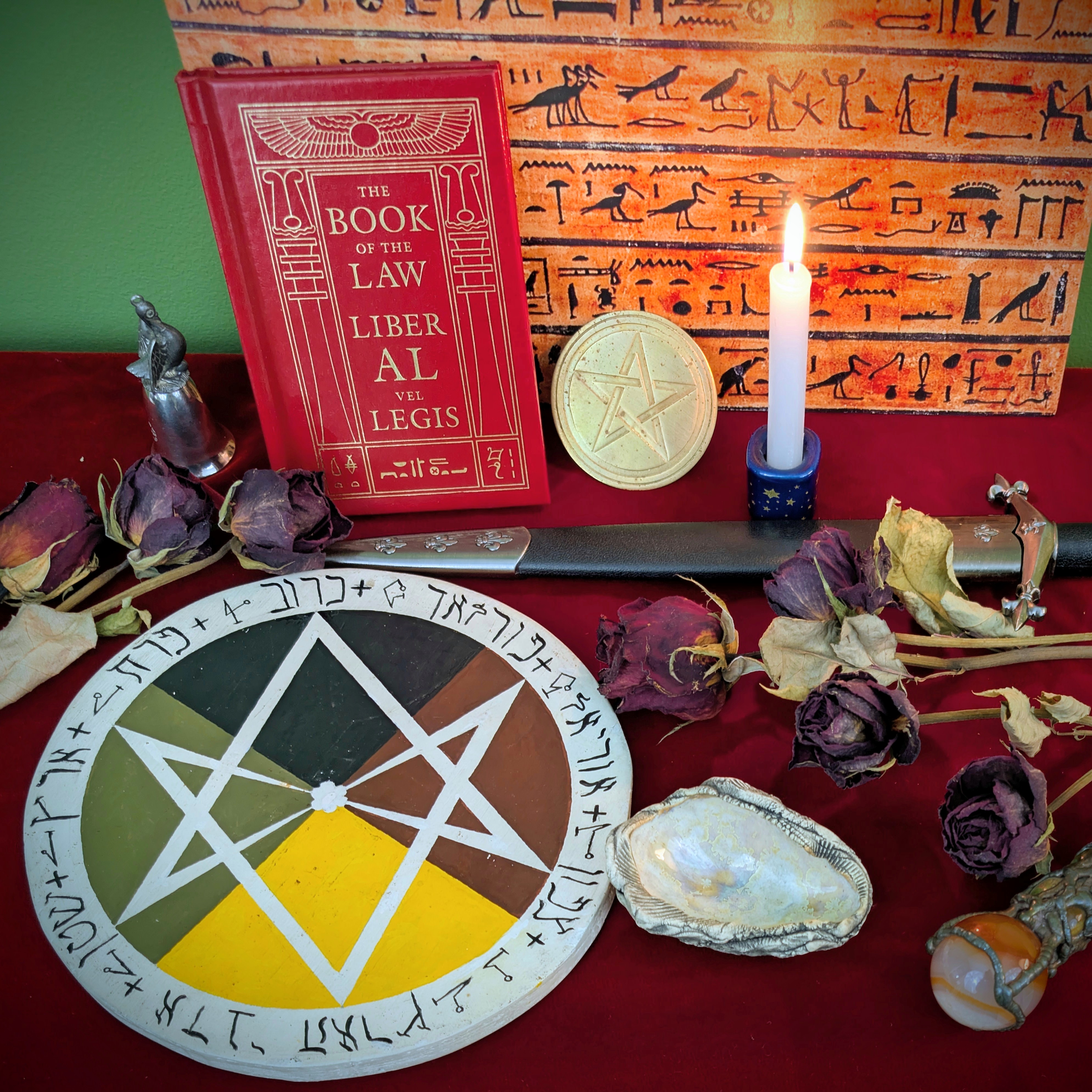
Aleister Crowley, Gerald Gardner, Robert Cochrane, and Helena Blavatsky: each of these people invented, recreated or discovered a system of magic and spirituality in the early part of the twentieth century, and all of them were modernists. A modernist believes that symbols mean things; each symbol has a true meaning. The problem for the modernist is that many people in the early part of the twentieth century were questioning those meanings. Modernists saw this as the breakdown of society, and it lead to things like Crowley's New Aeon, an attempt to repair the growing gap between symbol and meaning. In contrast, the postmodern worldview (the dominant worldview of the later part of the ...
"Writers will put things into a novel that they daren't put in sober prose, where you have to dot the I's and cross the T's."1 This quote is from Dion Fortune, to my mind the foremost magical teacher of the West. It tells us clearly that in writing fiction, magicians can go out on a limb. They can give us a taste, secondhand but deeply felt, of genuine magical experience. Our esoteric training might be about ideas and techniques, but magical fiction weds these to an imaginary punch that can create conditions for change in the reader. The Question of Magical ProgressionAll magical seekers ask this one question: "How can I become an adept, an initiate?"—maybe concluding sadly that ...