

 New Worlds of Body, Mind & Spirit Since 1901
 Structured both as a dialogue with contemporary Christian beliefs and as a clarification of beliefs Pagans from many traditions have in common, Pagans & Christians seeks to redress the misunderstandings that have occurred between these paths. Exploring both the differences and similarities between Pagan and Christian religious beliefs and practices, and seeking common ground for mutual understanding and acceptance this book is a groundbreaking work that seeks to unify that which has been in conflict far too long. This book debunks many long-standing stereotypes about both Christianity and Paganism. For instance, Paganism and science are not in fundamental conflict. Reality as revealed by quantum mechanics is paradoxical beyond the power of our minds to grasp, and consists ultimately of energy, not solid matter. You'll also learn that anyone can have a mystical experience. Mystical accounts, regardless of tradition or religious affiliation, seem to have this in common: those having the experiences conclude that, ultimately, suffering is not a fundamental aspect of reality, and that infinite and unconditional love ultimately is such an aspect. In the following discussion of polytheism and immanence, author Gus diZerega describes some of the differences and similarities between Pagans and Christians: Divine Experiences The Godhead is infinitely creative. The physical world around us, that which is most readily accessible to our senses, is only one aspect of this divine creativity. It is not all there is. The world of manifestation does not stop with the physical. There is also a spiritual world populated by a wide variety of beings—nature spirits, elementals, devas, ancestor spirits, deities, and the like. Skeptics point to the variety of contrasting and contradictory Gods to argue that Pagan deities are simply social constructs. If Pagan religion were only a philosophy seeking to impose an intellectual order on nature's diversity, such a criticism would be powerful. But Pagan practice is fundamentally experiential. Its philosophy and theology grow out of experience. Once we experientially encounter Divinity, we naturally try to make sense of it. In doing so we incorporate the context of the encounter and our own social and psychological framework. In addition, because the experience is of the superhuman, it is impossible to avoid metaphor when describing such experiences. Within this framework of interpretation Divinity responds to us, establishing a two-way relationship. While deities evolve with changing human understanding, deities themselves also can, and do, act to change that understanding. A God form will always be associated with a particular cultural context, but still not reducible to it. Because the Divine is more than we can conceive, any encounter will open outward in ways we cannot foresee. Additionally, if the view of Ultimate Divinity I am presenting is accurate, and it permeates everywhere, then any bounded thing, from human being to tree to rock to wind to concept, is only partially isolated. It is also a manifestation of the sacred, and possesses a spiritual aspect. Perhaps this is why even our intellectual concepts often end up revealing implications that go well beyond our explicit knowledge or deliberate intent. They are, in fact, not simply ours. Just as when we consider the boundaries between our own selves, the boundaries between spirit and matter are often vague. Is a material phenomenon such as the sea, and the rise of water, the manifestation of a spiritual force, or is it its symbol? Or does it perhaps, in some sense, constitute both? My interpretation of my experience is that this latter explanation is the most likely. No Pagan believes that the Godhead dwells in an idol. Only rarely do they believe that any spiritual entity does. Many do believe that certain types of spirits are closely associated with certain things or places, perhaps in the sense that our soul is associated with our body, or in the sense that a musician's heart can be manifest in his music. But this can hardly be equated with confusing God with a physical object. To quote from Celsus, who was answering the Christian charge of idolatry, "Who but an utter infant imagines that these things are Gods, and not votive offerings and images of Gods?" |
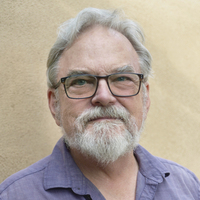
Gus diZerega (Taos, New Mexico) is a Third-Degree Gardnerian Elder. He spent several years studying with Brazilian shaman Antonio Costa e Silva and with other teachers in Native American and Afro-Brazilian traditions. Gus is ...