

 New Worlds of Body, Mind & Spirit Since 1901
 Like most people who first begin to take up studies in magic and suddenly find themselves attracted to the cards of the tarot, we originally thought that the primary use of tarot cards was for divination—to see into future events and try to determine what fate had in store for us. Like others before us, we learned early in our esoteric studies that a tarot reading was not just a snapshot of some unalterable destiny; a tarot reading simply provides the reader with tools to help analyze a specific situation or problem and offers a possible solution. Because human beings have free will, we are in charge of our own destiny. The tarot simply offers us another perspective, usually a higher perspective. We can choose to follow the road map that a tarot reading provides us, or we can choose to not follow it. It wasn't long before we discovered that the cards have many other uses besides divination. Ceremonial magicians have long utilized the cards for skrying, astral projection, pathworking, and ritual magic. The most wide-spread use of tarot cards in the Western mystery schools is as symbols for meditation and gateways into higher states of consciousness. The cards of the tarot provide powerful focal points for spiritual growth. However, every card of the tarot is also attributed to a specific magical force that the magician can invoke to accomplish his or her goals. Magic has been described as the science and art of causing change to occur in conformity with will. One of the practices that ceremonial magicians often engage in is the creation of talismans. A talisman can be defined as any physical object that has been consecrated with magical energies toward the achievement of a given purpose. It is considered a lifeless object before the magician magically breathes life into it by charging it with specific energies that are often astrological or qabalistic in nature. A charged talisman stores and radiates a magical energy to create change, and it is usually consecrated to attract something of a positive or beneficial nature such as monetary gain, protection, friendship, spiritual growth, knowledge, healing, or a needed skill. Any object can be used and consecrated as a magical talisman: gemstones, jewelry, tools, wands, etc. Magicians often create their own talismans out of paper or parchment—inscribing the talisman with the names and sigils of the particular force desired. And yet most magicians already own seventy-eight ready-made talismans that are associated with virtually every spiritual force imaginable—the cards of the tarot. A complete deck of tarot cards embodies a wondrous realm of divine powers and astrological energies that can be invoked through ritual, consecrated as talismans, and charged for any desired purpose. One of the hallmarks of ceremonial magic is the practice of working with spiritual entities—what the ancient Platonists called gods and intelligences, and what modern magicians call archangels and angels. Angels are spiritual beings that are considered to be specific aspects of God, each with a particular purpose and jurisdiction. The word angel comes from the Greek angelos, which is itself a translation of the Hebrew word melakh, meaning "messenger." They have been described as "messengers of the soul." The names of many angels end in the suffixes "-el" or "-yah," which are god-names. Since they are recognized as being in the service of God, it is only natural that working with these divine beings plays a major role in the transformative work of high magic. The magician always invokes the highest divine names first, and then proceeds to invoke the corresponding archangels and angels, right down the chain of command. Since each card of the tarot is associated with specific divine powers, including archangels and angels, these spiritual beings are called upon to consecrate the cards, transforming them from mere divinatory tools into potent magical talismans designed to attract the powers that they represent. Many of the tarot angels are known to us only through their astrological attributes and functions, as described in medieval grimoires and more recent magical texts. Other than the most well-known archangels of the elements (Raphael, Gabriel, Michael, and Uriel), few other angels and archangels have been described in graphic detail. This has made it difficult for magicians to visualize what images of these angels might look like. Since visualization plays such an important role in the practice of magic, this has always been a problem. To remedy this, the Hermetic Order of the Golden Dawn developed a practice called telesmatic magic. This system of magic gets its name from the Greek word telesmata, which means "talismans." A telesmatic image is an image of a deity, archangel or angel that is consciously constructed by the magician. Each Hebrew letter is associated with a set of images, including concepts such as "winged" or "fierce." The physical image of an angel is built from head to foot based on those associations linked to the specific letters of the angel's name. Then the complete image of the angel is drawn, painted or simply visualized in the imagination using those esoteric associations. The creation of a telesmatic image of an archangel or angel that can be visualized makes it possible for the magician to create a personal link or contact point with the angel. Telesmatic images of the tarot angels invoked in ritual will naturally make tarot talismans more potent. Tarot Talismans was designed to provide readers with a complete system for creating talismans from any favorite deck of tarot cards—from choosing the right card for the right purpose, to creating ritual card spreads aimed at actively manifesting the desired energies, to invoking and working with the tarot angels who rule over the cards. Using this book as a guide, we encourage readers to design their own rituals for creating magical talismans from the cards of the tarot. |
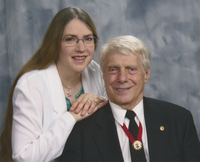
Both Chic and Sandra Tabatha Cicero are Chief Adepts of the Golden Dawn as reestablished by Israel Regardie: Tabatha is the current G.H. Imperatrix and Chic is the G.H. Imperator Emeritus. The Ciceros have written numerous ...